Gérer son temps : pas de secret, ma solution

Quand on est travailleur indépendant, iPro, il est primordial de savoir gérer son temps. D’être capable de bien dissocier sa vie de famille de sa vie professionnelle. Mon expérience personnelle m’amène, surprise, à constater qu’il n’y a pas de recette miracle, de modèle à suivre. L’important est vraiment de choisir la solution qui VOUS convient à l’instant t. Quitte à la faire évoluer.

Depuis 15 ans, je travaille chez moi, comme d’innombrables traducteurs indépendants. Il m’a suffi d’un peu de discipline pour m’astreindre à me mettre au travail et respecter les délais convenus avec mes clients même pendant les vacances scolaires, même les soirs où il y avait match à la télé, même lorsque ma famille venait en vacances dans la maison voisine. J’aimais énormément cette flexibilité, la satisfaction de pouvoir attaquer le travail à 5h pour profiter de mon après-midi, la possibilité d’aller chercher à l’improviste un enfant malade ou finissant plus tôt que prévu à l’école ou au collège, en récupérant le temps perdu plus tard, le soir ou le lendemain à l’aube. Et faire les courses en heures creuses… C’était MA solution idéale. Celle qui m’a permis de gagner et de conserver la confiance de mes clients tout en profitant d’une vie de famille d’une grande richesse.

Et puis… 15 ans ont passé, les enfants ont grandi, j’ai changé… et cette solution ne me satisfait plus. Ceux qui connaissent ma maison (270 m²) s’étrangleront peut-être, mais j’en ai assez de passer tout mon temps ici, de ne voir d’autres professionnels qu’exceptionnellement, à l’AG de l’Aprotrad, aux formations, sur les salons et les congrès auxquels je me rends deux à trois fois par an… J’ai donc décidé de louer un bureau à l’extérieur. Pour certains de mes interlocuteurs, c’est un pari hasardeux. Mais je crois à ce projet. J’ai l’intime conviction que séparer géographiquement ma vie professionnelle de ma vie privée va me permettre d’améliorer ma productivité et ma rentabilité au travail d’un côté, et de mieux profiter de mes proches (et de ma maison) de l’autre.

Après plusieurs visites, j’ai trouvé le bureau de mes rêves, celui qui satisfait le plus grand nombre des besoins que j’avais pris soin d’énumérer : sécurité (physique et informatique), prix abordable, espace disponible, distance de mon domicile, proximité du centre-ville, convivialité, tranquillité…

Dans les cartons, je continue de faire des listes de « pour » et de « contre ».

Les « pour » : tout ce que je vais gagner

Au travail

  • Je serai au bureau pour travailler, de telle heure à telle heure. Pas question d’aller mettre en route une lessive, tailler un rosier ou préparer un repas pendant la journée. Forcément, je vais gagner du temps. Parce que si chacune des opérations « parasite » ne prend que 10 minutes, la perte de concentration qui les accompagne dure bien plus que ça.
  • Fini de culpabiliser parce que j’ai accepté une traduction urgente alors que j’avais juré que je m’attaquerais au repassage en retard. Je suis au bureau pour travailler, point.
  • Mes voisins de bureau seront des professionnels, des hommes et des femmes qui travaillent, pas des voisines qui ont le temps de venir papoter en prenant un café. Les pauses seront clairement limitées par les obligations des uns et des autres.
  • J’aurai des conversations « pro ». J’ai connu ce syndrome que vous reconnaîtrez peut-être, des mères de famille en fin de congé de maternité qui n’en peuvent plus de n’entendre parler que de couches et de biberons. J’ai envie de discuter de rentabilité, de courbes de croissance, de TVA à poster… Je fantasme sur Caméra Café, c’est vous dire !
  • Je pourrai prendre des stagiaires, transmettre, accompagner, informer, faire découvrir et apprécier ce métier que j’adore…

À la maison

  • Avant de partir le matin, une fois de retour le soir, le week-end, je serai pleinement là (je ne vous cache pas que mes proches sont très demandeurs de cette nouvelle disponibilité).
  • Fini de culpabiliser parce que je m’attaque à la pile de repassage au lieu d’accepter une traduction urgente. Je serai à la maison, point.
  • J’aurai enfin le temps de tailler mes rosiers.
  • Je pourrai aussi prendre des engagements, accepter et lancer des invitations sans états d’âmes ni scrupules : je serai à la maison pour profiter de ma vie pas pour travailler !
  • Je serai plus disponible, pour moi-même et pour les autres. Je crois que ça n’a pas de prix.

Les « contre » : ce à quoi je ne sais pas si je vais m’habituer

  • Le matin, mon premier geste ne sera plus d’allumer l’ordinateur pour me réveiller doucement entre ma tasse de café, les dernières nouvelles de mes clients outre-Atlantique et le tour des blogs. Que vais-je faire à la place ? (J’ai déjà pensé à me lever plus tard, acheter un ordinateur portable…)
  • J’aime bien commencer la journée par un petit travail de moins d’une heure, petite relecture, déclaration de TVA, fin d’une traduction que j’ai abandonnée la veille… Dans mon planning interne, c’est du temps que je ne compte pas. Je vais devoir m’organiser autrement et affecter réellement ces petites tâches. Y parviendrai-je ?
  • Plus question de traîner en pyjama jusqu’à 10 heures.
  • Plus de sieste au soleil dans mon transat.
  • Impossible de me changer 3 fois dans la journée, selon la météo.
  • Si je pars avec des escarpins qui m’écorchent les pieds au bout d’un quart d’heure, je les garderai jusqu’au soir.

Clairement, les « contre » sont moins nombreux que les « pour », et relativement faciles à résoudre. Heureusement, d’ailleurs.

Ma conclusion est donc la suivante : pour bien gérer son temps (et son espace de travail), il est essentiel de trouver la solution qui s’adapte à vos besoins. N’hésitez pas à vous écouter : on travaille tellement mieux quand on se sent bien !

Et vous, quelle(s) solution(s) avez-vous choisie(s) ?


On Being an “Emerging” Translator

By Noah M. Mintz

There is a lot of conversation around “emerging” translators—and a lot of jokes made about cocoons and metamorphosis. But the fact is that the practice of literary translation is a lonely pursuit, and the mechanisms of the publishing business are often dauntingly obscure to the uninitiated. So though the term may be hard to define and might evoke butterflies as much as it does devotees of international literature, it can be very useful to have systems of support available for us fledglings.

I produced my translation of Patrick Goujon’s novel À l’arrache, excerpted in Two Lines 29, through the American Literary Translators Association’s Emerging Translator Mentorship Program. I had chosen to work on the book after meeting Goujon on my semester abroad in 2014, and had typed up a few sample pages, but had no idea how to get the text from my own laptop into the hands of readers. The legalities of obtaining rights, the intricacies of the submissions process, and my total lack of a C.V. all felt like major obstacles—that on top of the actual work of translating the novel’s rich language, complex structure, and various linguistic registers.

ALTA paired me with a mentor, the translator and professor Emmanuelle Ertel, whose work includes the French edition of Hanya Yanagihara’s A Little Life. In addition to her insightful edits and notes on the level of language, she was also a guide when it came to navigating all of the steps in the process, from inquiring about rights to selecting samples and brainstorming outlets where the book might be a good fit.

Just as revelatory was ALTA’s annual conference. I attended in 2016 as part of the mentorship program, and gave a reading from my project along with the other “mentees.” The community was warm and welcoming beyond anything I’d anticipated. I kept in touch with many of the translators, editors, publishers, and scholars I met there, was glad to reconnect at the following year’s conference, and am always excited to run into them at readings and book fairs.

If I were to give one piece of advice to other “emerging” translators trying to spread their wings, it would be to reach out and find other people who are already doing it. There are also great resources online such as the Emerging Literary Translators Network in America (ELTNA) email listservPEN America’s translator resources page, and Susan Bernofsky’s “Translationista” blog. Find a mentor, if you can. Ask for help. Make friends. Translation, at every level, is hard; it helps to have support.

Read Noah M. Mintz’s first published translation in Two Lines 29—out now!

TRADUTTORE…TRADITORE EN OCASIONES

La figura del traductor, tal y como comenta Enrique Badosa es una figura muy poco agradecida y que prácticamente vive en el anonimato, excepto algunos casos muy puntuales.

Este post me gustaría dedicárselo a la figura del traductor pero me gustaría que sirviera también como reflexión sobre la importancia y la repercusión que tiene el proceso de traducción en la difusión y el impacto de la obra del autor en el mercado editorial.

No podemos dejar de lado las palabras de Enrique cuando comenta que un autor es él y sus traductores, analicemos un poco este tema.

Cuando nos referimos al traductor como una figura traidora respecto a la obra deberíamos matizar un poco esta idea. Tal y como comenta Enrique Badosa no se puede generalizar, pero no olvidemos que, en cierta manera, la traducción de una obra acaba siendo una nueva versión de la obra en otra lengua. ¿Qué quiere decir esto? Pues que en el proceso de traducción el texto cambia, se fortalece, se debilita, en cierta manera, sufre un proceso de mutación.

Los problemas de traducción no solo se producen en la traducción completa de una obra, la mayoría de veces los podemos observar en los títulos de las películas, en los títulos de novelas que han llegado a nuestras manos, en cómo notamos al leer una obra traducida que algo falla, etc.

Os pondré un ejemplo claro de la traducción de un título de una novela de Bernhard Schlink Der Vorleser. Esta obra fue escrita en alemán y al ser traducida al inglés se tradujo por The Reader y al castellano o al catalán por El Lector. La película también se tradujo de forma idéntica. En un principio podréis pensar, si conocéis la historia, que la traducción sí que tiene una relación con la historia pero ¿Dónde está el problema? Muy sencillo. Vorleser en alemán quiere decir leer en voz alta, no leer. Si pensamos un poco en el  proceso de lectura me daréis la razón en que la lectura es un proceso que va de fuera (la obra) hacia dentro (el lector), en cambio la lectura en voz alta va de dentro (el lector que lee para los demás) hacia fuera (un público concreto, en este caso la protagonista). Por tanto, traduciendo este término como el lector se pierde el verdadero sentido del término que, en realidad, es la clave de toda al historia.

Los italianos fueron más listos la tradujeron por A voce alta: the reader.

Esto nos viene a decir que es muy importante, en el proceso de traducción, reflexionar sobre el verdadero sentido que el autor quiere dar a su obra, conocer la obra a fondo para encontrar pistas y ser, al mismo tiempo, fiel a la intención del autor.

Para acabar os facilito el artículo de Enrique Badosa: https://estheracereda.wordpress.com/2009/12/16/traduttore-traditore/

También os adjunto un artículo de mi bloc donde encontraréis otros casos curiosos de traducción literaria incluído el que aquí os he comentado: https://estheracereda.wordpress.com/curiosidades/

Come gestire una terza lingua in un testo

Cosa succede se traducendo un testo da una lingua A a una lingua B, notiamo che il testo di partenza è fortemente condizionato anche da una terza lingua C? Come ci comportiamo?

Ovviamente ogni caso è sui generis, quindi mi soffermerei su un esempio in particolare.

Mi è capitato di tradurre per una ricerca parte di un libro francese ambientato in Corea del Sud (Ida aupaysduMatin Calme di Ida Daussy) che conteneva quindi molti riferimenti culturali e linguistici coreani. In particolare, all’interno del testo erano inseriti termini coreani scritti “alla francese”: erano cioè scritti non solo nel nostro alfabeto, ma si adattavano alle regole di pronuncia francesi. Questo significa per esempio che un termine come 라면 (leggasi /ra.mjən/) era trascritto come lamyone, per adattarsi al meglio alle regole di pronuncia francesi. Possiamo notare quindi che è stata aggiunta una e finale (che in francese non si legge e che permette così che on non si legga con suono nasale) e che la prima lettera  (che si può trascrivere sia con r sia con l a seconda della sua posizione all’interno della parola) è stata trasformata in l nonostante si trovasse a inizio sillaba, in modo che non venisse letta con la tipica r francese.

Si può essere d’accordo oppure no con la scelta dell’autrice di utilizzare un metodo di traslitterazione “inventato” e adattato alle regole di pronuncia della propria lingua invece di utilizzare il metodo di traslitterazione ufficiale, ma non è questo il punto. Durante la traduzione da francese a italiano, il traduttore non può assolutamente mantenere i termini derivanti dal coreano così come li ha inseriti l’autrice. Per un lettore italiano, infatti, una trascrizione del genere non avrebbe senso e anzi, lo allontanerebbe ancora di più dal termine originale (soffermandoci sempre sulla stessa parola presa come esempio, un lettore italiano leggerebbe infatti “lamione”). Il traduttore dovrebbe quindi scegliere di utilizzare un metodo di traslitterazione diverso che potrebbe essere o un metodo simile a quello utilizzato dall’autrice, “inventandone” uno che si adatti alle regole di pronuncia italiane, oppure utilizzare il metodo di traslitterazione ufficiale.

E qui ci troviamo davanti a un altro problema: come fa il traduttore a sapere che la traslitterazione dei termini coreani non è corretta (o almeno non per un pubblico diverso da quello francese)? Solitamente infatti si sceglie un traduttore che sia a conoscenza della lingua di partenza e della lingua di arrivo, senza tenere conto degli eventuali terzi elementi culturali presenti nel testo. Un traduttore a conoscenza della sola lingua francese, pur documentandosi sulla cultura coreana, non avrebbe potuto sapere che questi termini non seguivano la traslitterazione ufficiale del coreano e quindi avrebbe probabilmente lasciato quei termini invariati. Solamente un traduttore a conoscenza di entrambe le lingue avrebbe potuto notare questo dettaglio importante e agire di conseguenza nella stesura della traduzione italiana.

Tutto questo è per sottolineare l’importanza di tutti gli elementi linguistici e culturali all’interno del testo, che non sono mai da sottovalutare nella scelta del traduttore. In un caso come questo, è dunque necessario che il testo venga tradotto da una persona che non solo conosca alla perfezione la lingua di partenza e quella di arrivo, ma che conosca almeno un minimo anche la terza lingua presente al suo interno.

Articolo scritto da:
Marianna Demarchi
Traduttrice freelance (EN/FR>IT)
Novara

Beyond “Untouchability”: Dalit Literature in Hindi

Dalit literature has emerged as an integral part of a larger political movement that offers substantive and detailed protest against the entrenched system of untouchability, or the socially institutionalized system of caste-based hierarchy and discrimination, in contemporary India. It traces its modern history to the early 1970s with the foundation of a literary-activist collective called the Dalit Panthers, whose members wrote primarily in Marathi—the language of Maharashtra, the home state of nationalist leader and foundational Dalit activist B. R. Ambedkar. Dalit literature has in recent years become a powerful and influential vehicle for the articulation of the voices of India’s most oppressed classes in a number of languages, Hindi prominent among them.

Dalit writers use fiction, autobiography, and literary criticism to actively rethink constructions of caste, race, religion, and gender, constructions that extend backward in Indian history but that have all been distinctively refigured in the postcolonial political context and that continue to shape day-to-day social and political identities. In the process, they reshape the very literary genres and interpretive procedures used to evaluate those same literary texts. In the past fifteen years, the national language of Hindi has become the site of increasing vibrancy as prominent writers and activists conversant in a number of languages compose their narratives and critical writing in Hindi, in conversation with other Dalit work directly in languages such as Marathi, or through translation, including from and into English.

Kausalya Baisantry, for instance, has written her autobiographical account excerpted here in Hindi even though she grew up speaking a local dialect of Marathi. She announces at the start of Doubly Cursed that she chose to write in Hindi in order to be the first Dalit woman to write her life story in the national language. As the title suggests, her account details the life of a political activist working against the twin injustices of caste-based discrimination and misogynistic patriarchy, a perspective even more insightful given that she came into consciousness in the early years of the social reformer B. R. Ambedkar’s campaign for both Dalit and women’s rights leading up to Independence in 1947. The scene included here offers a humorous glimpse into the new technologies of playback sound made available to Indian citizens in the 1930s both in the cinema hall and at home. In Hindi, Baisantry conveys a knowing but wry ambivalence over her family’s attempts to modernize, an ironic stance translator Christi Merrill decided to signal by italicizing key terms that in the Hindi are transliterated directly from English—“phonograph record,” for example. (Baisantry’s piece also incluldes a number of Hindi terms; these and others from elsewhere in the issue are defined in the glossary that follows this introduction.)

Several of the short stories featured here similarly reflect on the uneven promises of Western-style progress made to the Dalit community in the years following independence. Mohan Das Namishray’s story “Our Village” begins at its tragic and dramatic height when a young Dalit woman is paraded naked through the village center by the son of the local thakur, ostensibly as punishment for her husband’s failure to repay his debt of 500 rupees. In the story that follows, we see members of the Dalit community filing police “reports” and attempting to use the judicial system inherited from the British to petition for their rights against the entrenched feudal code upheld by local authorities. We also watch as a pair of idealistic journalists come from the city to report on this tragedy, dropping in stray phrases in English—again, transliterated into Hindi—to sound sophisticated and upper-class. Likewise, Anita Bharti’s story “The Case of the Quota Candidate” plays on the expectations a group of teachers have of a new colleague, guessing whether she is upper-caste like many of them or a “kotewali” who fulfills a mandate from the federal government reserving a percentage—the English term “quota” becomes “kote” in Hindi—of positions for “backward” castes. Suraj Badtiya’s short story “Gujji” tells of a young man from an untouchable family tagged with an unfortunate, caste-tinged epithet: “Gujji” refers to a traditional recipe for preparing sausages, sold at his family’s pork shop. He decides to throw off this casteist slur by pursuing an MBA and the post of marketing manager at McDonald’s, where the very same terms considered so polluting in traditional society are deemed sophisticated and forward-thinking when rough equivalents are uttered in English.

Certainly English maintains a curious, much debated position in the Indian literary scene more generally given its historical association with British colonial power. As a global lingua franca, it serves as a link language both within India and internationally, and in the case of Dalit literature has occasioned transnational conversations both within elite circles in India and abroad about work written originally in vernaculars like Hindi, Marathi, or Tamil. The prominent Indian travel writer and literary reviewer Pankaj Mishra lists Laura Brueck’s English translation of Ajay Navaria’s short story collection, Unclaimed Terrain (Navayana, 2013), among the “best books” of 2013 in The Guardian (November 23, 2013) for the way it hints “at the as-yet unrevealed depth and diversity of Indian literatures,” his review giving the English-language version a wider audience than it enjoyed in Hindi.

In this special issue we have included the recently published, semi-autobiographical story “Fragmentation” that Ajay Navaria based on his first trip out of India—to Greece—which itself was occasioned by the international circulation of this translated short story collection. “Fragmentation” is exemplary of the existential unease of Navaria’s protagonists that runs throughout almost all of his fiction, and also presents important perspectives on the Dalit author, translated in a world beyond caste, but not, as he discovers, beyond other forms of hierarchical ordering. This self-reflexivity is very much in conversation with other works of Dalit literature becoming increasingly popular in the West, including those mentioned by Mishra in a recent review in the New York Review of Books (December 21, 2017) of Sujata Gidla’s Ants Among Elephants (Farrar, Straus and Giroux, 2017):

The range and intricacy of Dalit experience can be grasped by English-language readers through the works of scholars and critics such as Anand Teltumbde, Gopal Guru, and D. R. Nagaraj. Daya Pawar’s pioneering autobiography Baluta, which describes caste violence in Mumbai in the 1940s and 1950s, appeared in a fine English translation in 2015. Omprakash Valmiki’s Joothan and Vasant Moon’s Growing Up Untouchable in India: A Dalit Autobiography are eye-opening memoirs of impoverished Dalit childhoods in the mid-twentieth century, while Ajay Navaria’s stories in Unclaimed Terrain turn an ironic gaze on the recent emergence of a Dalit middle class through affirmative action and economic liberalization.

The further irony is that Navaria’s Unclaimed Terrain, like Valmiki’s Joothan, and all the work in this special issue are themselves translated by scholars invigorated by the daring literary experimentation and anti-caste critiques. In her translator’s preface to Joothan, the University of Toronto English professor Arun Mukherjee writes movingly of the ways Valmiki’s account made her rethink her own upper-caste privilege and also forced her to reconsider the colonizer/colonized binaries that reigned in the field of postcolonial studies.

Dalit activists too understand the importance of translation in providing an opportunity for their work to circulate more widely. In forming an alliance with English-language readers, Dalit writers are able to call into question some of the dubious moral stances guarded by the indigenous elite in the name of preserving tradition. This strategy follows in the footsteps of   Ambedkar who, in the decades leading up to independence in 1947, began writing appeals aimed specifically to foreign readers, in such a way that called into question the elitism of the Congress Party, especially its claim to speak for all Indian subjects in demanding independence from British rule. In “A Plea to a Foreigner,” Ambedkar argued explicitly that “what the foreigner who chooses to side with the Congress should ask is not whether the Congress is fighting for freedom. He should ask: For whose freedom is the Congress fighting?” All the Dalit writers featured here follow in this Ambedkarite tradition and use their writing as a tool for reflecting openly on how crucial terms such as “rights” and “freedom” might translate into daily action. Like the work of English-language critics listed by Mishra, this approach situates these literary translations in a broader activist context that all the writers featured here engage in.

We draw from an exciting and extensive list of important works, and have generally focused on pieces written in Hindi that supplement what is already available in English translation. We have purposely chosen work that represents a range of political perspectives and genres, from writers who themselves are known for their range. Among the work that Mohan Das Namishray is known for is a four-volume history written in Hindi on the Indian Dalit Movement (Radhakrishna, 2013). Kausalya Baisantry is one of the activists interviewed by Urmila Pawar and Meenakshi Moon in their history of the Ambedkarite movement focusing on women, published first in Marathi (Stree Uchav, 1989) and in Wandana Sonalkar’s English translation as We Also Made History (Zubaan, 2008).

Dalit literature represents some of the most meaningful, socially engaged narrative voices in India today, and its international appeal is growing as well. Each of these writers has a keenness of vision we are excited to share with this English-speaking readership.


Glossary for the Issue

Note on italicization: We use Gayatri Chakravorty Spivak’s strategy of italicization for words that appear in English in the original texts to show the long-standing imbrication of the colonial language of English and Bengali. In the stories in the issue, this approach also shows how these colonial instruments of power are used by the local indigenous elite.

Arey: An expression of mild disbelief: “Seriously!” or “Come on!”

Ashtami: A Sanskrit term for the eighth day of the lunar fortnight, which is considered auspicious in Brahmanic Hinduism.

Basti: A settlement; often tightly-packed areas where the poor and disenfranchised live.

Bhaiya: Brother, a common term of friendly address.

Bhajans: HIndu spiritual songs.

Brahmins: Those who rank highest in the caste system (according to the Brahmins themselves).

Dalit: Once an insulting term literally meaning ground down into dust, “Dalit” has been reclaimed by the lowest castes as an empowering alternative to “untouchable.” We have left it lowercase when it is used as a description by a non-Dalit, and uppercase when used by a speaker self-referentially.

Darshan: Sight, most often used in a ritual sense of taking in the vision of a deity (and conversely, the deity taking in the vision of the devotee).

DhedhChamar: Leather-worker caste names. The invocation of these terms reveals much about the ongoing idiom of untouchability. Because working with dead animals is considered polluting, anyone in the leather-working caste is c.onsidered polluted.

Dhol and mridanga: Double-sided drums played by musicians in “folk” traditions, and sometimes also by those with classical training in one or more traditions.

Harijan bai: Gandhi suggested that all untouchables be called Harijan—literally, people of Lord Hari and therefore God—but B. R. Ambedkar and his followers rejected the term for sounding decidedly patronizing. “Bai” is often a respectful term in Marathi and Rajasthani used when referring to a woman, but is sometimes added to a title to clarify that a person is female.

Haveli: Often referred to as a “mansion” since it is built of solid materials such as stone and is home to the most elite family or families in the village. Because it is usually a multi-room, imposing structure that houses multiple generations, the women segregate themselves in the inner sanctum while the men occupy the outer rooms where they entertain visitors and conduct business.

Kambakht: A mild curse word usually used as an adjective, for someone deemed unfortunate or wretched.

Kardhi with seviyan: Kardhi is usually made from a heated yogurt sauce with spices and thickened with chickpea flour; seviyan are noodles, also made from chickpea flour.

Khadi: Homespun cotton fabric, popularized by Gandhi as a symbol of nationalism in the late colonial period.

Lathi: Literally a bamboo cane used to drive oxen and punish enemies, but symbolically considered a sign of power. Used in English-language newspapers in India.

Ovi: Metrical Marathi poetry traditionally sung by women.

Panchayat: Traditional village council consisting of five voting members.

Puja, Naagpuja: Common term for Hindu worshippers venerating a deity, in this case the divine form of the cobra.

Sadhu: A Hindu holy man who takes a vow of asceticism and renounces worldly concerns.

Sala: Standard Hindi for a sister’s husband, and so by implication a person who sleeps with one’s sister. Used quite commonly as a form of abuse. The variation Salo is even more colloquial.

Samadhi: The place where a corpse is cremated or buried; also, the state of passing into the next realm

Sasur: A respectful term of address for a father in law, that can also used as a form of abuse for an old man. In this case, the variation Sasuro is even more colloquial and disrespectful.

Savarna: With caste, i.e., the opposite of “outcaste” or untouchable.

Thakur: Both a title and a caste name; refers to the lord of the village. Sometimes considered a petty king.

© 2018 by Laura Brueck and Christi A. Merrill. All rights reserved.

We Can All Be Polyglots

A friend in Paris has sent me a recent article from an unexpected source, The New Yorker. It’s by one of their well-known staff writers Judith Thurman and its title is The mystery of people who speak dozens of languages. In what follows I will try to dispel some of the mystery.

Pruned of its New Yorker chattiness, the first part of the article gives interesting information about famous polyglots in the past:

*  According to Pliny the Elder, the Greco-Persian king Mithridates VI, who ruled twenty-two nations in the first century B.C., administered their laws in as many languages, and could harangue in each of them.
*  Plutarch claimed that Cleopatra very seldom had need of an interpreter, and was the only monarch of her Greek dynasty fluent in Egyptian.
*  Elizabeth I also allegedly mastered the tongues of her realm—Welsh, Cornish, Scottish, and Irish, plus six others [including the language of her enemy, Spanish].
*  The prowess of Giuseppe Mezzofanti (1774-1849) is more astounding and better documented. Mezzofanti, an Italian cardinal, was fluent in at least thirty languages and studied another forty-two, including, he claimed, Algonquin. In the decades that he lived in Rome, as the chief custodian of the Vatican Library, notables from around the world dropped by to interrogate him in their mother tongues, and he flitted as nimbly among them as a bee in a rose garden.
*  Thurman misses out the 18th-century English orientalist and translator Sir William Jones, who was reputed to know 26 languages.

Those were champions, so-called hyperglots. Their achievement was the fruit of many years of learning. But scarcely less remarkable is the achievement by the little girl Bella Devyatkina who was described last month on this blog and who could converse in seven languages at the age of four. Yet the underlying reason why all of them could do what they did is the same. It’s that human psychology and the physical human brain are built from infancy, perhaps from birth, for multilingualism (bilingualism being a special case of multilingualism and not the other way round.)  Bella’s mother insists that her daughter, for all her precocity, is not a genius. It’s just that she has been put in situations and relationships where she responds to the motivation of receiving a present from speakers of other languages.

Scientists and philosophers agree that language is one of the marvels of human evolution, No other animals have anything comparable. To it has been added another evolutionary marvel: the ability to learn multiple languages. The examples quoted above suggest that in principle there is no limit to their number. Yes, there are practical limits; the time we can devote to learning them and the length of our lives for instance, and the amount of contact we have with other-language speakers . And there are also psychological constraints, in particular motivation, without which we may be unwilling to work at it. But not the structure of our minds.

There are different degrees of multilingualism, which makes it difficult to compare polyglots. Full multilingualism requires much more than knowing the grammars and vocabularies of the languages. The functioning multilingual can do the following:

a)  Keep the languages separate. Actually very young bilinguals are prone to mixing their languages in the same sentence or utterance, a phenomenon linguists call code switching. Typically this weakness disappears around age three, but vestiges of it remain throughout life. We multilinguals are all used to occurrences of leakage or interference between our languages; for instance the common phenomenon of false friends. However, they dwindle to a frequency where they don’t hamper communication.
Just how the separation is maintained is a matter of disagreement. Some psycholinguists believe we keep our languages in separate drawers, as it were, and take them out and activate them as we need them. Others think that on the contrary they are all present in our working minds but we suppress the ones we don’t need at the moment.
b)  Switch between the languages. This may be done at will and almost instantaneously; or the switch may be triggered automatically by a stimulus, for instance when answering a question in the language in which it is asked.
c)  Use the languages appropriately to express the thoughts we want to convey or to understand what others are telling us. It may be, however, that we aren’t equally competent at this in all our languages; it depends very much on the experience we’ve had in using them.
d)  Use the languages in ways that are appropriate for the speaker/writer and for the addressee. For more about it and the weakness of machine translation in this respect, enter pragmatics in the Search box on the right.

There are several ways in which we can learn languages. For example, “Mezzofanti, the son of a carpenter, picked up Latin by standing outside a seminary, listening to the boys recite their conjugations.” I learnt my mother language, English, unconsciously and effortlessly from birth as I’m sure you did; three languages (French, German, Latin) in compulsory formal courses at school from age 11; one (Arabic) in formal university courses from age 18 because I was interested in it and thought it would help me get a job; and two others later (Spanish and Valencian) without ever taking a course in them but from elementary teach-yourself books and everyday conversation with native speakers with whom I was working. Apart from English, age had little to do with it. If I went to live in another country, even at my advanced age, I wouldn’t hesitate to learn its language. Of course, as with any natural skill, there is a pathology: a minority of people may have learning problems, and language learning becomes more difficult, requires more conscious effort, once the stage of early plasticity is passed.  It has seemed to me, though, that most of my English and Canadian compatriots who say they can’t learn a foreign language are like people who don’t learn to swim because they’re afraid of the water.

Sources
Judith Thurman. The mystery of people who speak dozens of languages. The New Yorker, 3 September 2018. My thanks to Philippe Lambert for sending it.

William Jones (philologist). Wikipedia, 2018.

Image
Cardinal Guseppe Mezzofanti.

Lorenzo Tomasin: l’impronta digitale impoverisce le lingue (se non sai come affrontarla)

In che modo la tecnologia sta influenzando, e per certi versi addirittura soppiantando, la cultura umanistica? E perché da mezzo utile a tutti i saperi umani sta diventando un fine? A Pordenonelegge queste domande sono state al centro del dialogo tra Lorenzo Tomasin, professore di Filologia romanza e di Storia della lingua italiana, e Juan Carlos De Martín, professore al Dipartimento di automatica e informatica al Politecnico di Torino, a partire da L’impronta digitale (Carocci, 2017), un agile saggio scritto dal professor Tomasin che esplora l’impatto delle nuove tecnologie su istruzione, ricerca e politiche culturali.

l-impronta-digitale-cultura-umanistica-e-tecnologia-lorenzo-tomasin-184x300Noi linguisti in generale abbiamo un rapporto un po’ ambiguo con la tecnologia: non possiamo farne a meno nella vita e nel lavoro quotidiani, però ne abbiamo un certo timore (l’ombra della traduzione automatica aleggia su di noi!); sappiamo che ci offre tantissime opportunità, dalla localizzazione agli strumenti per l’insegnamento delle lingue, ma può sottrarci il piacere di creare prodotti “di qualità artigianale”; ci serve per tenerci in contatto e aggiornati quando tendiamo a isolarci, ma ci ruba moltissimo tempo e concentrazione. Insomma: mi interessava approfondire questo rapporto dialettico e altalenante tra linguisti e tecnologia, e l’incontro L’impronta digitale ha offerto tantissimi spunti in questo senso (e non solo).
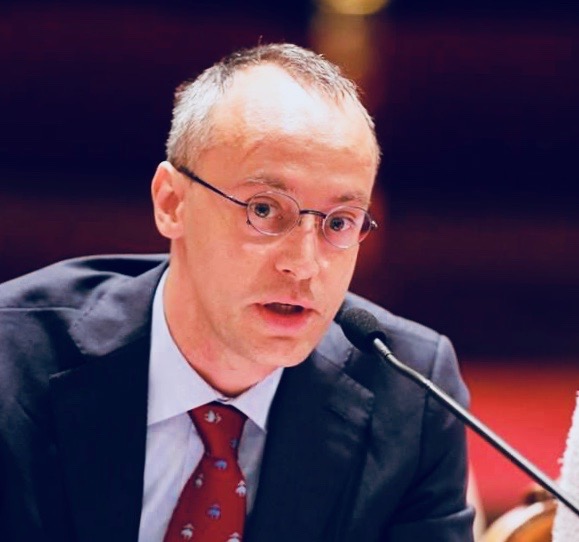
Per dare ulteriore corpo a questa ricchezza di stimoli, Linguaenauti ospita il professor Tomasin, che ci regala il suo punto di vista su alcune questioni che riguardano tutti noi linguisti del XXI secolo.

ypI0xcMg 2

A Pordenonelegge ha sottolineato come oggi la cultura dominante sia quella tecnologica, da alcuni considerata una sorta di “latino del XXI secolo” per l’importanza culturale che ha assunto. Pensa che il linguaggio tecnologico stia diventando una lingua comune vera e propria, che esclude dal progresso chi non è in grado di parlarla?

Chi ha proposto l’immagine del “latino del XXI secolo” (l’ingegnere direttore di un importante Politecnico svizzero) non pensava tanto al linguaggio tecnologico, quanto alle conoscenze informatiche nel loro complesso che, secondo lui, danno oggi accesso al potere e alla ricchezza come avrebbe fatto un tempo il latino. Ora, è ben vero che il latino poteva costituire un requisito per l’accesso a posizioni di potere, ma il senso della sua centralità nel sistema educativo non era certo questo. Chi oggi propone un sistema basato sul predominio delle tecniche (non più delle scienze o delle conoscenze) utili a fare qualcosa – e in particolare a conquistare le leve di ricchezza e potere – ha evidentemente un’idea di cultura che è quello caratteristico della mentalità tecnologica. Ed è all’opposto della mentalità scientifica e umanistica sulla quale abbiamo costruito i nostri valori di civiltà.

Citando Panofsky ci ha ricordato  che l’umanista “è colui che contesta l’autorità e rispetta la tradizione”. Secondo lei, quale autorità e quale tradizione si trovano di fronte gli umanisti, o aspiranti tali, di oggi? E come possono contestare la prima rispettando la seconda?

Il modello culturale oggi dominante, martellato da un’insistente propaganda tecnocentrica che mitizza la rivoluzione informatica ed emargina il ruolo dell’attività intellettuale e speculativa non ancorata alla tecnologia, rappresenta oggi uno dei più potenti strumenti di condizionamento mentale. Tale modello culturale, tra l’altro, nega il valore della tradizione in nome di un’idea rozza e quasi violenta del progresso, che considera il passato inutile e il solo presente degno d’attenzione. È contro questa autorità che oggi la cultura umanistica può (e secondo me deve) esercitare la propria funzione di critica, di de-mitizzazione, e di smascheramento. È lo stesso spirito che spinse i pionieri della rivoluzione scientifica a contestare i dogmatici modelli scolastici: in un certo senso, per rovesciare la provocatoria frase da cui siamo partiti, l’aristotelismo e il geocentrismo dei nostri tempi sono costituiti dal presentismo dominante nella cultura tecnologica e dall’idea che – come è stato scritto in un famoso articolo uscito qualche anno fa su Wired– il diluvio dei dati rende obsoleto il metodo scientifico e l’elaborazione teorica.

Nel corso della sua discussione con Juan Carlos De Martín ha commentato l’uso ormai diffusissimo dell’inglese come lingua unica, veicolo della contemporaneità, affermando che non riesce a immaginare “come un mondo che parla una sola lingua possa essere migliore di un mondo che ne parla cinque o sei”. In che modo il plurilinguismo è un valore, in un contesto che va verso la semplificazione comunicativa a tutti i costi?

L’affermazione di un modello rigidamente monolingue (solo inglese) nel dibattito scientifico, nella produzione intellettuale e nella pratica dell’insegnamento rappresenta uno dei sintomi più preoccupanti dell’oscurantismo odierno e della rozzezza culturale delle classi dirigenti. La pluralità delle lingue nel dibattito intellettuale – che crea, certamente, difficoltà pratiche e ostacoli, ma favorisce anche la maturazione di punti di vista diversi, di legami con una molteplicità di tradizioni, insomma di una vera pluralità culturale – viene percepita (soprattutto dai tecnologi e dai tecnocrati) come nulla più che un fastidioso contrattempo, che è necessario eliminare per concentrarsi sugli aspetti puramente tecnici, i quali peraltro richiedono non una vera lingua universale, ma il simulacro impoverito e azzoppato di una lingua: è l’inglese dei tecnici, spesso stravolto e ridotto a larva di una lingua. Possiamo davvero rischiare di andare verso un mondo in cui quella lingua divenga l’unico veicolo del dibattito scientifico?

Tra i traduttori si discute, a volte con entusiasmo e spesso con timore, dell’avanzare dell’intelligenza artificiale e in particolare degli strumenti di traduzione assistita e automatica. Pensa che in una disciplina come la traduzione l’impronta digitale arriverà mai a sostituire quella umana?

In questo come in molti altri casi, molto dipende dall’atteggiamento con cui ci si pone di fronte alla risorsa tecnologica: se si assume un punto di vista tipicamente umanistico ed ecologico (perché basato sulla sostenibilità delle scelte), la tecnologia può aiutare il plurilinguismo sostenendolo e rafforzandolo, e valorizzando il lavoro – comunque insostituibile – della traduzione umana, che è un lavoro culturale prima e più che semplicemente tecnico. Se invece si concepisce la tecnologia nel modo tipico in cui l’ha concepito la tradizione ingegneresca, cioè come uno schiacciasassi utile solo a spianare la strada a un malinteso progresso, si rischia di fare del linguaggio ciò che tecnica e tecnologia hanno fatto del paesaggio, dell’ambiente e di tanti aspetti della vita sociale: un campo di battaglia disseminato di danni talora irreversibili. Che nel caso delle lingue consistono nella distruzione della diversità culturale, nell’impoverimento delle risorse linguistiche, nella morte delle lingue o nel loro abbassamento a dialetti in via d’estinzione.

Dall’incontro di Pordenonelegge è emerso come nel XXI secolo il mondo umanistico e quello tecnologico non siano in realtà contrapposti o legati rispettivamente al passato e al futuro, come spesso vengono percepiti, ma necessariamente complementari e contemporanei. Da professore di filologia, che consiglio può dare ai ragazzi che si sentono attratti dagli studi umanistici ma temono di rimanere tagliati fuori dalla cultura tecnologica oggi così dominante?

Il consiglio è quello di non farsi ammaliare da mode e retoriche dominanti ma effimere. Qualche decennio fa, un grande fascino aleggiava su facoltà e percorsi di studi che, essendo stati concepiti in modo troppo ancorato ad un tornaconto immediato e irresponsabile, sono presto decaduti divenendo emblemi di pratiche inquinanti, o economicamente fallimentari, o distruttive e perciò superate. Gli studi umanistici (veri), come quelli scientifici (veri), sono sottratti a questa sorta di razzìa culturale, che oggi attraversa la tecnologia presentandola come la chiave del futuro, mentre al massimo servirà a porre le basi per i problemi – e forse i disastri – di un domani abbastanza vicino. Per poi forse cadere nella desuetudine e nel discredito generale.

ypI0xcMg
Lorenzo Tomasin è dal 2012 professore ordinario di Storia della lingua italiana, e dal 2014 di Filologia romanza presso l’Università di Losanna. Autore di un centinaio di articoli scientifici e una decina di volumi, codirige una Storia dell’italiano scritto pubblicata da Carocci, di cui sono usciti finora tre volumi (2014). Contributore regolare delle pagine letterarie del Sole-24ore e del Corriere del Ticino, è esperto per la letteratura in lingua italiana della Pro Helvetia Stiftung (Zurigo) e membro della Giuria dei Letterati del Premio Campiello Letteratura. Per Carocci ha pubblicato nel 2017 L’impronta digitale. Cultura umanistica e tecnologia.

Postato il 

TermsCafé by Translators Café

I am sure many of you have heard about TranslatorsCafé and possibly TermCafé. I personally have not used this platform, but it came up while reading an article on a translation magazine of recent publication, so I guess it might be helpful to some people. Have you used it? Let me know what you think. In the meantime, I am copying below a short description. It seems that members are allowed to create their own glossaries online.

“TermsCafé is a powerful and user-friendly terminology data management tool by TranslatorsCafe.com that is designed for use by translators for managing multilingual terminological data. Now, you will have 77,420 entries in 158 dictionaries in 61 languages created by 365 authors at your fingertips. The tool is intended for online creation, distribution and management of your terminology data. All data is stored on the TermsCafe.com server. You can export data for storage on your local computer or import it from several formats into your dictionaries created on TermsCafe.com.”

Being this a terminology blog, I thought I would add it as part of my cloud tag Toolbox 

Happy searching

TROUSSE À OUTILS POUR TRADUCTEURS INDÉPENDANTS

Les traducteurs sont des individus intelligents, d’avides lecteurs, d’insatiables curieux, des chercheurs hors pair et des linguistes troisième dan, mais lorsqu’ils font le choix d’exercer leur métier en tant qu’indépendants il leur faut acquérir rapidement de nouvelles compétences pour créer et développer l’entreprise qui leur permettra de vivre de leurs multiples talents. Pour accélérer cet apprentissage et vous éviter de vous perdre sur Internet en quête d’une réponse à vos interrogations sur les subtilités de la stratégie de niche et de l’abattement forfaitaire, je vous propose ci-dessous une petite trousse à outils de l’entrepreneur, véritable couteau suisse du traducteur indépendant :

LIVRES ET E-BOOKS

J’ai déjà consacré un billet aux ouvrages que je recommande à toute personne désireuse de se lancer en traduction. Si vous ne l’avez pas encore parcouru, je vous conseille donc d’y jeter un œil et vous propose les ajouts suivants (hélas tous en anglais) :

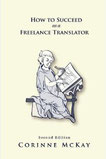
Deuxième édition de l’excellent ouvrage de Corinne McKayHow to Succeed as a Freelance Translator, ce livre est un véritable manuel d’instructions à l’usage de tous les nouveaux venus de la profession (même s’il s’adresse d’abord à des lecteurs américains). Cette version a été aérée et mise à jour pour inclure, notamment, plus d’information sur l’utilisation d’Internet et des réseaux sociaux. Accessible et optimiste, il sert également de base à une formation en ligne (payante) dispensée par son auteur.


On ne présente plus Marta Stelmaszak, traductrice et interprète d’origine polonaise, résidant au Royaume-Uni et chantre de la gestion d’entreprise auprès des traducteurs. Son livre intitulé The Business Guide for Translators, publié en octobre dernier, est disponible en version numérique et papier. Bourré d’exercices et d’éléments interactifs, il incorpore des concepts de marketing enseignés dans les grandes universités et écoles de commerce et les applique aux entreprises de traduction.


101 Things a Translator Needs to Know, est un recueil de conseils pratiques, aéré et illustré, préparé par le WLF Think Tank une association informelle de traducteurs mondialement connus (au sein de notre profession en tout cas). En s’appuyant sur leurs 500 ans d’expérience collective dans divers domaines de la traduction (technique, littéraire, audiovisuelle, etc.), ils expliquent comment un traducteur doit penser et agir pour réussir.


Nicole Y. Adams, traductrice renommée spécialisée en marketing, relations publiques et communication d’entreprise, offre généreusement sur son site plusieurs publications numériques remplies de précieux conseils pour promouvoir vos services, aussi bien en ligne qu’en personne, auprès d’agences de traduction que de clients directs. Parmi toutes ces pépites, The Bright Side of Freelance Translation coécrit avec Andrew Morris, est un formidable recueil de témoignages pour vous redonner le moral et la foi en vos capacités à développer votre activité.


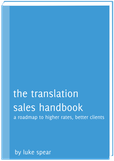
The translation sales handbook de Luke Spear est un excellent ouvrage pour tout traducteur cherchant à développer son entreprise. Clair et concret, il se concentre sur une part essentielle de notre activité : la vente, ou comment accroître ses revenus en vendant plus et plus cher. À ce titre, le le recommande tout particulièrement aux nouveaux traducteurs, qui éviteront ainsi certaines erreurs classiques de débutant. Entre autres, l’idée de facturer ses prestations au forfait plutôt qu’au nombre de mots est intéressante et mérite d’être explorée.


Gourou de la technologie auprès de l’American Translator Association, Jost Zetzsche, publie un document de 400 pages, intitulé The Translator’s Tool Box. Régulièrement mis à jour, il contient tout ce qu’un traducteur doit savoir pour bien maîtriser les outils informatiques qui peuvent lui simplifier la tâche et augmenter sa productivité. En plus de cet ouvrage disponible en format PDF, vous recevrez la version premium du bulletin d’information (The Tool Box Journal) que son auteur publie chaque mois.


BLOGS ET BULLETINS

  • Blogs de traducteurs : la traductosphère est peuplée de blogueurs, plus ou moins spécialisés, prêts à partager leur expérience et leurs bons plans avec les petits nouveaux. Pour trouver ces gisements d’information, rendez-vous sur les sites de Nathalie Renevier (Alp-Traduction) et de Patricia Bathélémy (Patoudit). Vous pouvez aussi consulter la liste de billets recommandés par les Piles intermédiaires.


CALCULATRICES, CONVERTISSEURS ET SIMULATEURS

  • Freelance hourly rate calculator : sur le même principe que le précédent, cet outil en ligne permet d’établir un tarif horaire à partir de vos coûts, du nombre d’heures facturables et des bénéfices que vous souhaitez réaliser. Dommage qu’il ne tienne pas compte des charges sociales et fiscales !
  • Convertisseur de tarifs : cette calculatrice est avant tout destinée aux traducteurs rémunérés en droits d’auteur (dits traducteurs littéraires), mais peut aussi rendre service aux traducteurs techniques pour convertir leur tarif de langue source en langue cible (en tenant compte du taux de foisonnement), du mot à la ligne, au signe ou au feuillet ou encore de passer d’un forfait à un autre mode de tarification.
  • Convertisseur de devises : ne me demandez pas pourquoi, mais j’utilise exclusivement le convertisseur de devises de la société OANDA. S’il en existe bien d’autres, je le trouve particulièrement pratique : accessible en ligne, il vous donne le taux de change pour n’importe quelle combinaison de monnaies, à n’importe quelle date. Vous pouvez aussi suivre l’évolution des cours, pour identifier le moment le plus opportun pour transférer des fonds.
  • Aide au choix du statut : cet outil interactif permet de trouver le statut d’entreprise le plus approprié en répondant à quelques questions.
  • Simulateur de charges sociales et fiscales : développé par l’Ordre des Experts-Comptables en partenariat avec l’Agence France Entreprises, ce simulateur gratuit permet de comparer dans un même tableau le coût social et fiscal du régime de l’auto-entrepreneur avec celui de la micro-entreprise et du régime réel de déclaration contrôlée, afin de choisir l’option la plus favorable.
  • Simulateur EIRL/EURL : autre simulateur proposé par l’Ordre des Experts-Comptables, celui-ci compare l’entreprise individuelle à responsabilité limitée (EIRL) avec l’entreprise unipersonnelle à responsabilité limitée (EURL) qui offre le choix entre imposition sur le revenu ou sur les sociétés.
  • Calculatrice de charges pour l’auto-entrepreneur : comme son nom l’indique, cette calculatrice permet d’évaluer le montant total des charges et des cotisations à verser par l’auto-entrepreneur en fonction de son chiffre d’affaires et de l’option de versement libératoire de l’impôt sur le revenu. Attention, en tant que traducteur, vous exercez une « activité libérale relevant de la caisse d’assurance vieillesse de la Cipav ».


SOURCES OFFICIELLES

  • URSSAF (Union pour le Recouvrement des cotisations de la Sécurité sociale et des Allocations familiales) : l’URSSAF assure la collecte des cotisations d’allocations familiales et les contributions CSG et CRDS ainsi que la contribution à la formation professionnelle des travailleurs indépendants que nous sommes, afin de financer la protection sociale de tous les Français. Présent dans chaque région, c’est notre interlocuteur privilégié, représentant l’ensemble des organismes de protection sociale, au moment de la création, de la modification et de la cessation de notre activité.
  • RSI (Régime social des indépendants) : régime de sécurité sociale obligatoire des indépendants. Les prestations d’assurance maladie-maternité sont gérées, pour le compte du RSI, par une mutuelle ou une société d’assurance que vous avez choisie lors de votre inscription auprès du Centre de formalité des entreprises (CFE). C’est donc à cet organisme que vous devez vous adresser en priorité avant de contacter éventuellement votre caisse RSI.
  • Portail officiel de l’autoentrepreneur : site d’information officiel sur le régime de l’auto-entreprise, sur lequel vous pouvez vous inscrire en tant qu’auto-entrepreneur, puis déclarer vos recettes et payer vos cotisations. Pour se renseigner, la liste de questions/réponses est particulièrement complète, mais vous pouvez aussi utiliser le portail pour prendre contact avec votre URSSAF et télécharger les attestations prouvant que vous êtes en règle avec l’administration.
  • Net-entreprises : ce site est un service gratuit proposé par l’ensemble des organismes de protection sociale aux entreprises et à leurs mandataires (experts-comptables, centres de gestion agréés, etc.) pour effectuer et régler par internet toutes leurs déclarations sociales.


ALLIÉS ET PARTENAIRES

  • Agence France Entrepreneur (AFE) : les fidèles lecteurs de ce blog connaissent déjà l’AFE à laquelle je fais souvent référence. Cet organisme, créé il y a 35 ans à l’initiative des pouvoirs publics, est une mine d’or pour les créateurs et les chefs d’entreprise français. Vous y trouverez des informations claires et mises à jour pour répondre à vos questions et orienter vos démarches.
  • Centres de gestion agréés (CGA) : les CGA sont des associations ayant pour mission d’assister les petites entreprises en matière de gestion et de fiscalité, tout en jouant un rôle dans la prévention des difficultés. À ce titre, ils organisent des séances d’information et de formation spécialement conçues pour les gérants de petites entreprises et leur fournissent une analyse des informations économiques, comptables et financières. Adhérer à un CGA n’est pas obligatoire, mais les entreprises soumises à un régime réel d’imposition qui ne le font pas voient leur bénéfice imposable majoré de 25 % avant d’être soumis au barème progressif par tranches de l’impôt sur le revenu. Pour trouver un centre, sollicitez l’avis de vos collègues et consultez l’annuaire de la Fédération des centres de gestion agréés (FCGA)
  • Organismes de formation : j’ai déjà abordé ce sujet dans un billet sur la formation professionnelle, mais retenez que les trois sites suivants proposent toute l’année de nombreux ateliers en ligne destinés aux traducteurs : la SFTeCPD et ProZ.


AUTRES RESSOURCES UTILES

  • Applications mobiles : il existe des milliers d’applications très utiles pour améliorer la productivité des entrepreneurs. Mes préférées sont Feedly (agrégateur de flux RSS pour consulter tous vos blogs préférés sur un seul site), Dropbox (stockage et partage de documents), Evernote (pour tout noter et garder sous la main listes, photos, documents, sites web, etc.), Pocket (outil très pratique pour mettre instantanément de côté des articles à lire plus tard), Dashlane (gestionnaire de mots de passe et portefeuille numérique) et Hootsuite(gestion centralisée des réseaux sociaux).
  • Calendrier de salons : pour trouver des clients directs, rien ne vaut les salons professionnels et pour trouver le salon qu’il vous faut selon votre domaine de spécialisation, vous pouvez consulter le calendrier des salons, foires et évènements organisés en France de l’Union française des métiers de l’évènement (UNIMEV).
  • Sources terminologiques : là encore, Les Piles intermédiaires nous sauve (nt ?) la mise avec une magnifique liste de glossaires et autres ressources en ligne à faire pleurer de joie tout bon linguiste. Côté outils, l’Unité coordination de la terminologie (TermCoord) du Parlement européen vous donne accès à plusieurs ressources très utiles, dont la base de données terminologique des institutions européennes IATE et un moteur de recherche pour trouver des glossaires. Vous pouvez aussi installer sur votre ordinateur l’extension de l’excellent Centre national de ressources textuelles et lexicales (CNTL) (pour Firefox) et IntelliWebSearch, un outil pour automatiser vos recherches sur Internet (et dans les dictionnaires électroniques) afin d’améliorer votre productivité.


Voilà, c’est tout pour l’instant, mais j’ai sûrement oublié d’autres outils précieux. Alors si vous connaissez une pépite, n’hésitez pas à la partager avec les lecteurs de ce blog !


Pour aller plus loin :


À propos de l’auteur

Professionnelle accréditée en commerce international ayant travaillé plusieurs années comme conseillère pour les PME, Gaëlle Gagné est devenue traductrice indépendante en 2005. À la tête de Trëma Translations, elle traduit de l’anglais vers le français et partage ses connaissances en gestion d’entreprise avec ses collègues traducteurs dans un blog intitulé Mes petites affaires.

CONSEJOS PARA EVITAR IMPAGOS Y ESTAFAS A TRADUCTORES

Poder realizar tu trabajo a través de internet tiene ventajas, pero también inconvenientes. Por desgracia, no es infrecuente leer comentarios y experiencias de compañeros que han sido víctimas de estafas, impagos y otras desgracias que afectan al bolsillo. Veamos algunos trucos y consejos para prevenir alguna de estas situaciones en la medida de lo posible.

ANTES DE ACEPTAR EL ENCARGO

Un cliente nuevo se pone en contacto contigo y te pide presupuesto. ¡Qué alegría! Antes de pedirle archivos (si no te los ha mandado), busca al cliente en internet. También en el BlueBoard y busca menciones en alguna lista de traducción como TRAD o grupos de traductores de FB. Si encuentras información positiva, ¡adelante con el presupuesto! Si no te convence lo que encuentras, deberás valorar si quieres arriesgarte. Si no aparece ningún dato relevante o no das con el cliente en internet no es mala señal, pero tendrás que tomar precauciones adicionales.

CLIENTES PARTICULARES

En este caso, nada te impide hacerle un presupuesto en el que indiques que el abono debe realizarse por adelantado. Esta sería la opción más segura. Si tienes la documentación original, puede servirte como garantía de que el cliente pasará a buscar la traducción y, en tal caso, el pago a la entrega también sería una opción.

AGENCIAS DE TRADUCCIÓN O COMPAÑEROS TRADUCTORES/INTÉRPRETES U OTRAS EMPRESAS O ENTIDADES

Si se pone en contacto contigo una empresa de traducción de la que no encuentras referencias, tendrás que analizar un poco la información que encuentres en internet. ¿Cómo es su página web? ¿Tiene un apartado de “Quiénes somos” en el que haya más datos sobre las personas que conforman la empresa? ¿Aparecen datos de contacto como dirección, teléfono, etc.? ¿Quién es el dueño? ¿Está en Linkedin la persona que te ha escrito? ¿A nombre de quién está el dominio? ¿Te escriben desde una dirección de correo del dominio o es una cuenta gratuita? Si no hay rastro de estas personas y la página web no te da buena espina, lo mejor sería no arriesgarse. Si prefieres coger el trabajo, es importantísimo que pidas número de identificación fiscal, dirección y teléfono. Además, guarde toda la documentación y pide o emita tú mismo una orden de pedido con todos los datos del encargo (volumen, fecha de entrega, identificación del cliente y plazos de pago).

En el caso de que se tratase de otro tipo de empresas ajenas al sector, tendrías que hacer una investigación similar a la indicada en el párrafo anterior. Aunque en este caso podrías pedir pago por adelantado o el 50 % antes de empezar a traducir. Aunque no se estile en el sector de la traducción, hay otros sectores en los que es lo más normal del mundo. Y, ten en cuenta, que al final el que pone las condiciones en tu negocio eres tú. ?

Mención aparte merecerían las administraciones públicas, ya que suelen tener sus propios procesos y plazos de pago. Aquí son lentejas: o las tomas o las dejas.

¿Y SI NO ME PAGAN LA TRADUCCIÓN?

En el caso de que, a pesar de que ese cliente nuevo pareciera solvente, el pago no se realice en el pago acordado, deberías actuar inmediatamente. Ponte en contacto con el cliente por el medio con el que se comunicó habitualmente contigo durante el encargo e indícale, siempre en un tono profesional, que no has recibido el pago acordado. Quizá haya sido un simple descuido o ya te lo ha enviado pero no lo has recibido todavía en tu banco. Si te comenta otro tipo de problemas y, en función de si te convence o de si compensa ser flexible, deberás pedirle el pago en X días y gestionar la situación según si te paga o no en la nueva fecha acordada.

Si no consigues ponerte en contacto con el cliente en un tiempo prudencial o en el supuesto de que te ponga excusas para pagarte, podrías recurrir al envío de un burofax. Aquí se explica su funcionamiento. Si sigue sin dar resultado, el siguiente paso en serio sería el procedimiento monitorio. En el blog El Gascón Jurado se detalla en qué consiste y cuáles son los pasos a seguir.

Evidentemente, meterse en jaleos de esta envergadura va a depender, por un lado, del importe de la factura y, por otro, de tu paciencia para insistir. Si se trata de importes elevados o si conoces a otras personas afectadas por impagos de ese mismo cliente, incluso podría salir a cuenta buscar a un abogado que se haga cargo del asunto por nosotros o, llegado el extremo, que lleve la reclamación por vía judicial.

Aunque cada caso será diferente, espero que este resumen de consejos para evitar estafas o impagos os sirva specialmente para prevenir estas situaciones y que os paguen siempre.